The evidence behind crossbreeding and improved herd productivity
Hybrid vigour (often referred to as heterosis in the scientific literature), occurs when crossbred progeny perform better than the average performance of their parent breeds. It is one of the most well-established ways of lifting the productivity of a herd, and not just for weight gain but also for traits associated with fertility, survival, maternal performance and longevity.
For example long-term USDA research found that crossbred cows produced approximately 25–30% more cumulative calf weaning weight over their productive lives than straightbred cows (Cundiff et. al., 1992 & 2024).
While the value of hybrid vigour has never gone away, its use in the southern Australian cattle industry appears to have lessened. This has probably been driven by a number of factors including; processor signals that reward apparent consistency and coat-colour uniformity, strong individual breed promotion, the absence of any single owner of crossbreeding promotion, and the almost non-existance of evidence based breed-specific estimates of hybrid vigour.
Breed-specific estimates are difficult to obtain because of the significant resources required to estimate the effects. They require large, expensive replicated studies comparing, for example, Speckle Park purebreds, the other parental breed and their F1 progeny under common conditions.
Nonetheless, given the significant positive impact observed in the scientific literature and by producers, crossbreeding remains an important and arguably significantly underused opportunity in commercial beef production.
MLA’s Australian crossbreeding guidance continues to explicitly identify planned crossbreeding and hybrid vigour as mechanisms for improving commercial productivity. Importantly, MLA emphasises that the economic outcome depends on the production system, market, breed combination and starting herd performance (MLA).
Recent Australian research provides evidence of the value of crossbreeding under commercial conditions, comparing Angus and Hereford-sired females. It found heterosis effects of 3.6% for pre-joining weight and 13% for the proportion of heifers reaching puberty before joining. The researchers concluded that most of the advantage in growth and puberty was attributable to heterosis, the Authors also noted that breed differences also contributed to reproductive performance (Pitchford et al., 2022).
Hybrid vigour does not replace good genetics. Selection within a herd captures additive genetic improvement—the type of genetic merit measured through tools such as BREEDPLAN EBVs. Crossbreeding provides an additional opportunity to capture non-additive genetic effects. A well-designed breeding program can therefore combine high genetic merit with hybrid vigour.
Where are the greatest benefits?
The strongest heterosis effects generally occur in traits that are relatively lowly heritable, particularly reproduction and fitness.
A major meta-analysis covering 42 cattle studies and 518 estimates of heterosis found beneficial effects across a wide range of economically important traits. Average heterosis was approximately 12% for fertility, 12% for growth and 16% for maternal traits, although results varied considerably between breeds and traits. Importantly nearly 90% of statistically significant heterosis estimates were favourable (Bunning et al., 2019).
The benefit can become particularly important when expressed through the cow herd. Research involving Hereford, Angus and Simmental genetics reported maternal heterosis of 11.5% for cows calving, 10.4% for cows weaning a calf and 17.9% for calf weaning weight per cow (Kress et al., 1992).
Hybrid vigour benefits the production system broadly, rather than simply as extra kilograms in an individual calf.
What about Speckle Park?
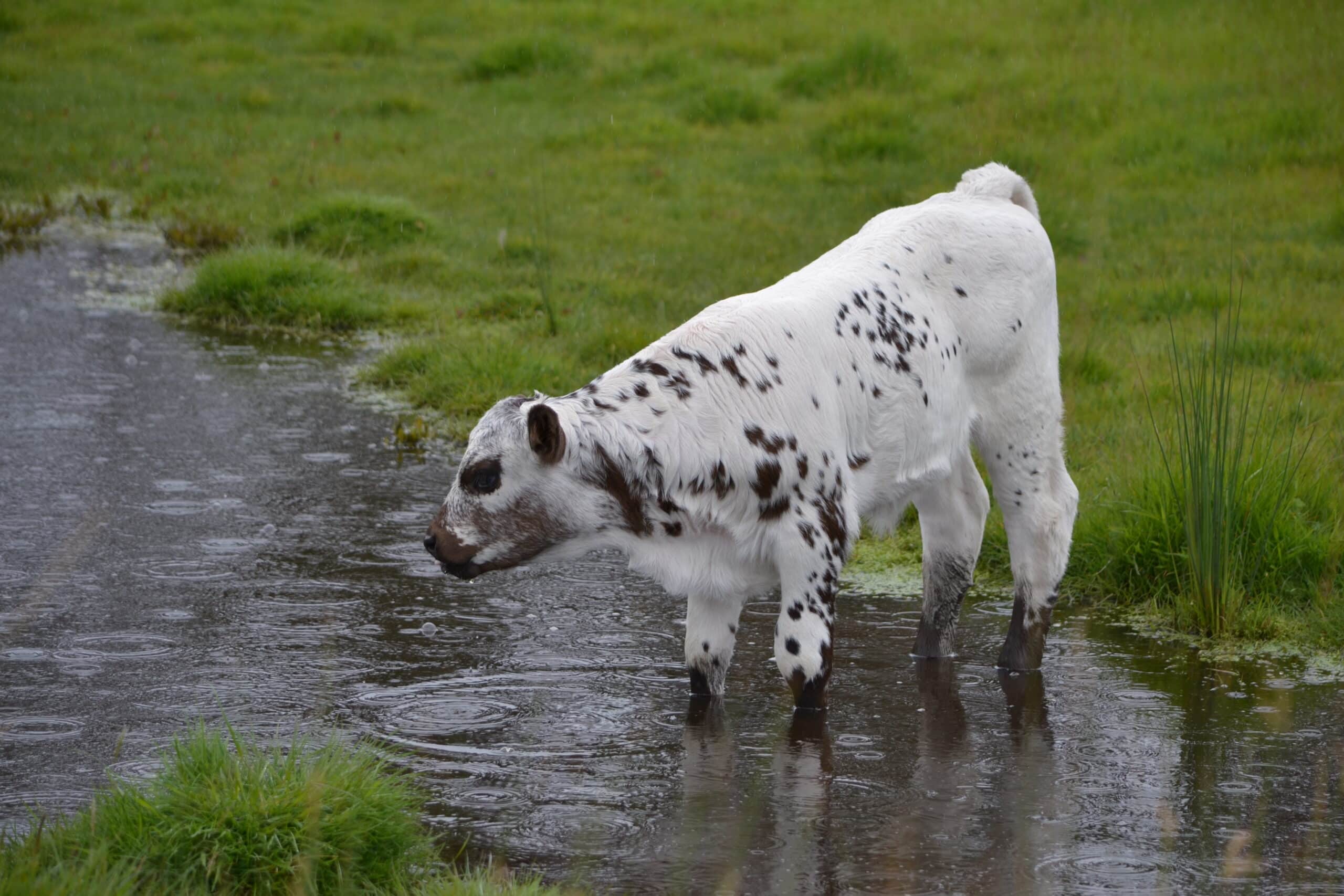
Speckle Park provides an interesting option for commercial crossbreeding because it is a British-derived Bos taurus beef breed with a distinct and unique breeding history. A recent Australian study of 13 Breeds showed that Speckle Park is genetically distinct from the established British breeds (Manzari et al., 2026)
The genetic distance between breeds is considered predictive of the degree of hybrid vigour in a cross, with the greater distance increasing hybrid vigour (Legarra et al., 2023).
Further, a recent study from the US, which did not include Speckle Park, has shown distinct differences between breeds in average hybrid vigour when used in crossbreeding (Engle et al., 2025).
While there are currently no Speckle Park breed specific estimates of hybrid vigour they are highly regarded by producers for their impact in first-cross production systems, particularly for lifting carcase weights and eating quality along with growth.
There is also encouraging Australian commercial evidence. In one reported comparison, F1 Speckle Park × Angus heifers produced slightly heavier carcases than the Angus comparison group despite entering the feedlot around 20 kg lighter. They also achieved higher average carcase returns and higher marbling scores in that particular trial. (Speckle Park International, 2020).
While considerable genetic variation exists within cattle breeds, and selection within breeds remains the foundation of longterm genetic improvement, within-breed variation should not be confused with heterosis. Although crossing genetically differentiated lines within a breed can produce some hybrid vigour, the strongest and most predictable opportunity to capture heterosis generally comes from planned crossing of genetically differentiated populations. Selection and crossbreeding therefore capture different components of genetic improvement and can be complementary rather than competing strategies.
The evidence base for Speckle Park is also continuing to develop. Speckle Park is one of the breeds targeted for inclusion in MLA’s developing TEMPBEEF multibreed genetic evaluation, while Speckle Park International is participating in work associated with the development of future national beef reference populations. The breed is also expanding collection of performance data from commercial Speckle Park and Speckle Park-influenced cattle. These initiatives should provide a stronger objective evidence base for comparing Speckle Park genetics with other breeds and assessing their performance in commercial production systems.
Take home
For commercial producers, the evidence supports considering planned crossbreeding as part of a breeding program. The greatest value comes from choosing complementary breeds, selecting genetically superior sires within those breeds, and designing the breeding system to capture hybrid vigour.
At Stellar Speckle Park, we provide balanced, performance-recorded genetics capable of contributing calving ease, growth, fertility and carcase quality—giving commercial producers the opportunity to combine those genetics with the advantages of a well-planned crossbreeding program.
References
Bunning, H., Wall, E., Chagunda, M. G. G., Banos, G., & Simm, G. (2019). Heterosis in cattle crossbreeding schemes in tropical regions: Meta-analysis of effects of breed combination, trait type, and climate on level of heterosis. Journal of Animal Science, 97(1), 29–34. https://doi.org/10.1093/jas/sky406
Cundiff, L.V., Núñez-Dominguez, R., Dickerson, G.E., Gregory, K.E. & Koch, R.M. (1992). “Heterosis for lifetime production in Hereford, Angus, Shorthorn, and crossbred cows.” Journal of Animal Science, 70(8), 2397–2410. DOI: 10.2527/1992.7082397x.
Cundiff, L.V., Kuehn, L.A. & Thallman, R.M. (2024). Use of heterosis and breed differences in crossbreeding systems or composite populations to improve efficiency of beef production. In M. Dikeman (Ed.), Encyclopedia of Meat Sciences (3rd ed.), pp. 601–628. Elsevier. DOI: 10.1016/B978-0-323-85125-1.00152-6.
Engle, B. N., Thallman, R. M., Snelling, W. M., Wheeler, T. L., Shackelford, S. D., King, D. A., & Kuehn, L. A. (2025). Breed-specific heterosis for growth and carcass traits in 18 U.S. cattle breeds. Journal of Animal Science, 103, skaf048. https://doi.org/10.1093/jas/skaf048
Kress, D. D., Doornbos, D. E., Anderson, D. C., & Rossi, D. (1992). Performance of crosses among Hereford, Angus, and Simmental cattle with different levels of Simmental breeding: VI. Maternal heterosis of 3- to 8-year-old dams and the dominance model. Journal of Animal Science, 70(9), 2682–2687. https://doi.org/10.2527/1992.7092682x
Legarra, A., Gonzalez-Dieguez, D., Charcosset, A., & Vitezica, Z. G. (2023). Impact of interpopulation distance on dominance variance and average heterosis in hybrid populations within species. Genetics, 224(1), iyad059. https://doi.org/10.1093/genetics/iyad059
Manzari, Z., Connors, N.K., van der Werf, J.H.J., Johnston, D.J. & Ferdosi, M.H. (2026). A genome-wide assessment of the population structure of thirteen admixed and pure Australian beef cattle breeds. Journal of Animal Science, 104, skag242. DOI: 10.1093/jas/skag242.
Meat & Livestock Australia (MLA). More Beef from Pastures – Cattle Genetics: Select the most profitable breed or crossbreeding system to achieve genetic progress. Meat & Livestock Australia.
Pitchford, W.S., Pitchford, J.M., Alexopoulos, J.G. & Hebart, M.L. (2022). Genomic analysis of purebred and crossbred Angus cows quantifies heterozygosity, breed, and additive effects on components of reproduction. Animals, 12(1), 61. DOI: 10.3390/ani12010061.
Speckle Park International. (2020, August 6). Trial adds weight to Speckle Park claims. https://www.specklepark.org/news-current/trial-adds-weight-to-speckle-park-claims